
Play Aviator Now!
Home → Auto Cashout
Aviator Auto Cashout
Auto cashout in Aviator
The auto cashout feature in Aviator, developed by Spribe, allows players to predefine a multiplier threshold for automatic withdrawal. This function removes the need for manual reaction time during the round, which is critical given the game's 97.00% theoretical RTP and 3.00% house edge structure. Players relying on this tool must understand that it does not alter the built-in mathematical advantage held by the casino over the long run.
Aviator round parameters
| Max multiplier | x1,000,000 |
| RTP | 97.00% |
| Bet range | 0.10 EUR / USD / GBP (varies by operator) - 100 EUR / USD / GBP (varies by operator) |
While the primary game offers a maximum win potential of x1,000,000 through manual play, automation caps individual payouts at the chosen multiplier limit rather than allowing for higher variance strikes. The Provably Fair system using SHA-256 ensures transparency regardless of whether the player uses manual or automated strategies, maintaining trust in the outcome integrity certified by iTech Labs.
Comparing this approach to Dice, another Spribe title with an adjustable volatility and max win of x970, highlights how automation suits different risk profiles. In Aviator, the continuous rising multiplier requires precise timing, whereas Dice relies on binary outcomes. The auto cashout thus serves as a disciplined tool to secure profits before the plane flies away in any given round.
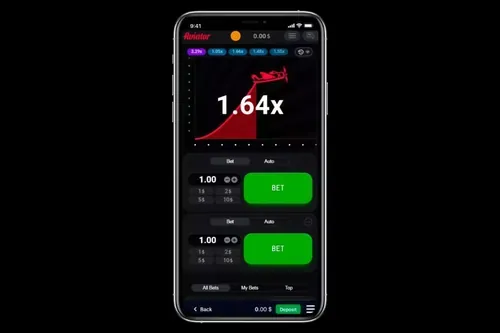
Setting a target multiplier
Players must select a specific multiplier value to trigger the automatic exit from the current round, a decision that directly influences the expected return based on the 97.00% RTP parameter. Setting a lower target increases the frequency of wins but reduces the average payout size, creating a steady flow of small returns rather than occasional large jackpots. This strategy aligns with conservative bankroll management principles often preferred by casual players seeking extended session times.
A higher target multiplier increases the potential payout significantly but decreases the probability of the plane reaching that height before crashing. Since the game features a dual-bet mode, players can split their stake between a low-target auto cashout and a high-risk manual play. This combination allows for hedging against total loss while still chasing the maximum win cap of x1,000,000 available in rare instances.
The choice of target multiplier should reflect the player’s tolerance for variance, especially since operators may configure lower RTPs like 96% or even 94% in some jurisdictions. These variations affect the long-term expected loss per unit wagered, making the selection of a sustainable exit point crucial for preserving capital. Understanding these settings helps players manage expectations regarding the actual return on investment over hundreds of rounds played.
Why automation removes hesitation
Human reaction time introduces latency that can cost a player valuable points when the multiplier is rising rapidly toward a crash point in Aviator. By automating the cashout, the system executes the command instantly at the exact moment the threshold is reached, eliminating the delay inherent in manual clicking. This precision is vital for capturing the intended profit margin defined by the player’s initial strategy and budget constraints during the session.
The absence of hesitation also mitigates emotional decision-making, such as greed causing a player to hold on too long hoping for a bigger multiplier. In a game where the house edge is fixed at 3.00%, allowing emotions to dictate timing often leads to losing the entire bet when the plane flies away. Automation enforces discipline, ensuring that the predefined exit strategy is executed consistently across every single round played without deviation.
This mechanical consistency contrasts with games like Dice, where volatility adjustments allow players to manually tweak risk parameters more dynamically. In Aviator, the continuous nature of the multiplier means that hesitation is purely detrimental to the outcome. The auto cashout feature thus acts as a protective mechanism, safeguarding the player’s bankroll against impulsive errors during high-pressure moments in the live bet feed.
Low targets versus high targets
Choosing a low target multiplier, such as x1.10 or x1.20, results in frequent but small wins, which can help maintain a stable balance over many rounds. This approach leverages the high hit frequency typical of crash games, though the overall return remains capped by the 97.00% RTP ceiling set by Spribe. Players opting for this strategy accept lower variance in exchange for a smoother gameplay experience with fewer dramatic losses.
Conversely, aiming for high targets involves waiting for the multiplier to climb significantly, which occurs less frequently but yields much larger payouts when successful. This method carries a higher risk of busting out quickly, as the plane may fly away before reaching the desired height in most rounds. The maximum win of x1,000,000 is only accessible through such high-risk attempts, making it unsuitable for conservative bankroll management strategies employed by many users.
The difference in outcome between these two approaches is stark when viewed against the backdrop of the game’s provably fair algorithm. Low targets provide consistent, albeit modest, returns that slowly erode the balance due to the 3.00% house edge. High targets offer the chance of substantial gains but require patience and a larger reserve to withstand the inevitable losing streaks associated with lower probability events in the crash mechanic.
Choosing a cashout target
The Aviator multiplier rises continuously while the plane ascends, requiring players to cash out before it crashes. This crash mechanic defines the risk profile differently than traditional slots which rely on reel stops. A conservative target of x2.00 secures small wins but leaves the maximum win cap of x1,000,000 largely untouched. Higher targets increase variance significantly as the probability of the plane flying away grows exponentially with each step upward.
The theoretical RTP of 97.00% represents the long-term average return over hundreds of thousands of rounds played by all users. Operators may configure lower settings such as 96% or 94%, directly reducing the expected value for every wager placed. Choosing a specific cashout point does not alter this built-in house edge of 3.00% in any mathematical way. The player only controls timing, not the underlying algorithm that determines when the round ends abruptly.
Aviator: key facts
| Parameter | Value |
|---|---|
| Game | Aviator |
| Studio | Spribe |
| Released | 2019 |
| RTP | 97.00% |
| House edge | 3.00% |
| Max win | x1,000,000 |
Frequency against payout size
Spribe designed this game with a high volatility structure that balances frequent small exits against rare massive payouts. Unlike Plane Game which also offers a 97.00% RTP and high volatility, Aviator allows dual bets to hedge these risks simultaneously. Cashouts below x1.50 occur more often but contribute minimally to the overall bankroll growth rate. Larger multipliers require patience and discipline, as waiting for higher values increases the chance of losing the entire stake.
Testing targets in demo
Aviator features a provably fair system using SHA-256 to combine server seeds with client seeds and a nonce for transparency. Testing strategies in demo mode helps players understand how auto cashout functions without risking real funds immediately. The dual-bet mode enables setting one automatic exit while manually managing another bet for greater control. This feature removes reaction time from the outcome but does not change the fundamental mathematical expectation of the game.
Adjusting after a losing streak
A losing streak often tempts players to increase their next bet size to recover previous losses quickly and efficiently. However, the fixed nature of the crash multiplier means no betting system can overcome the 3.00% house edge effectively. Increasing stakes after losses amplifies the impact of the maximum win cap limitation during high volatility periods. Players should maintain consistent bet sizes rather than chasing deficits, as the random number generator remains independent of past results.
When to turn automation off
The auto cashout feature provides stability by executing trades at predefined multipliers regardless of human emotional reactions. Turning this function off requires constant monitoring of the rising multiplier, which can lead to delayed responses during rapid crashes. Manual play introduces psychological biases that often result in holding onto bets longer than the optimal statistical strategy suggests. For disciplined sessions, keeping automation active ensures adherence to the chosen risk parameters throughout the entire gaming session.
Double bet setups
The double bet setup in Aviator allows a player to place two simultaneous wagers during one round, utilizing the dual-bet mode feature provided by Spribe. This configuration requires the user to manage two distinct cashout targets independently within the same rising multiplier cycle, effectively doubling the exposure to the game's 3.00% house edge per round. Consequently, the total stake is immediately doubled, meaning a 10 € base wager becomes a 20 € risk before the plane even begins its ascent into the void.
The theoretical RTP of 97.00% applies to the entire session average rather than individual rounds, so splitting stakes does not alter the built-in mathematical disadvantage of the crash mechanic. Operators may configure lower RTP versions like 96% or 94%, which would further erode returns on both bets simultaneously regardless of how the dual-bet strategy is executed over time. Therefore, players must accept that the long-term expectation remains negative, with the maximum win capped at x1,000,000 for any single successful cashout event in this instant game.
Splitting stakes across two bets
Splitting stakes across two bets enables a hybrid approach where one wager targets a low, safe multiplier while the other chases a high-risk target within the same Spribe round. This method leverages the auto cashout function to secure profits on the first bet, thereby offsetting potential losses from the second bet if the plane flies away prematurely before reaching higher multipliers. The provably fair SHA-256 algorithm ensures that neither bet is rigged, but the statistical variance remains high due to the unpredictable nature of the crash point.
The maximum win potential of x1,000,000 is theoretically reachable only through the risky portion of the split stake, as the safe bet typically yields modest returns that rarely approach such extreme caps. Since Aviator has no reels or paylines, the outcome depends solely on timing, making it impossible to guarantee that the safe bet will always cover the cost of the risky one in every single round. Players should note that certification by iTech Labs and BMM Testlabs confirms the integrity of the random number generation used to determine when the multiplier stops rising.
Combining a safe and a risky target
Combining a safe and a risky target involves setting an early auto cashout for the first bet to preserve capital, while leaving the second bet open to chase larger multipliers without automated intervention. This strategy attempts to balance the 97.00% theoretical return by ensuring consistent small wins from the safe leg, which can subsidize the inevitable losses incurred by the risky leg over hundreds of rounds. However, the house edge of 3.00% persists across all bets, meaning that even with this diversified approach, the expected value remains negative in the long run for the player.
Unlike Tower Rush by Galaxsys, which offers a max win of 100x, Aviator provides a significantly higher ceiling of x1,000,000, allowing the risky bet to potentially generate substantial payouts that dwarf the initial stake. The live bet feed displays real-time actions of other players, offering social context but no predictive power regarding when the current round's multiplier will crash and end the flight sequence. Consequently, relying on the crowd's behavior is futile, as each round's outcome is determined independently by the server seed and client seeds combined via nonce.
Limits of any automated plan
Limits of any automated plan are constrained by the fact that auto cashout removes reaction time but cannot change the built-in edge or predict the exact moment the plane flies away. Even with precise settings, the randomness inherent in the SHA-256 provably fair system means that a plan might consistently trigger cashouts just before a massive multiplier spike, leading to missed opportunities for higher wins. The maximum win cap of x1,000,000 remains unreachable if the auto cashout is set too conservatively, highlighting the trade-off between security and potential payout magnitude in crash games.
Theoretical RTP figures like 97.00% assume a very long run, so short-term automated plans often deviate significantly from this average due to the high volatility of crash mechanics. Operators may offer lower RTP configurations such as 94%, which would further reduce the effectiveness of any automation strategy by increasing the frequency of losing rounds relative to winning ones. Therefore, players using auto cashout should view it as a risk management tool rather than a profit-generating mechanism, especially given that the game features no spins or traditional slot structures.
What automation cannot fix
What automation cannot fix is the fundamental mathematical disadvantage imposed by the 3.00% house edge, which remains constant regardless of how many bets are placed or how quickly they are cashed out. No amount of strategic planning or use of the dual-bet mode can eliminate the fact that the casino retains a percentage of all wagers over time, as verified by audits from iTech Labs and BMM Testlabs. This means that even perfect execution of a plan will eventually yield a net loss, aligning with the theoretical return of 97.00% over an extended period of play.
Automation also fails to account for operator-specific variations, such as adjusted RTP settings of 96% or 94%, which may be applied to the game instance without altering the visual interface or gameplay mechanics. These hidden reductions in return directly impact the longevity of a player's bankroll, making it harder for any automated strategy to sustain itself against the cumulative effect of a higher house edge. Consequently, users must remain aware that the provably fair algorithm ensures transparency but does not guarantee profitability or protect against the inherent risks of crash gaming.
DemoRTP & VolatilityHow to PlayAuto CashoutStrategyBonusesMobileDownload & AppMax WinSimilar GamesReviewFAQSitemap
Aviator 2026