
Play Aviator Now!
Home → Strategy
Aviator Strategy
Approaching Aviator sensibly
The theoretical RTP of 97.00% for the Spribe title represents a house edge of 3.00%, which defines the long-term expected loss rate for any session duration. Operators may configure lower variants at 96% or 94%, meaning players must verify the specific version before committing funds to ensure they understand the exact mathematical disadvantage involved.
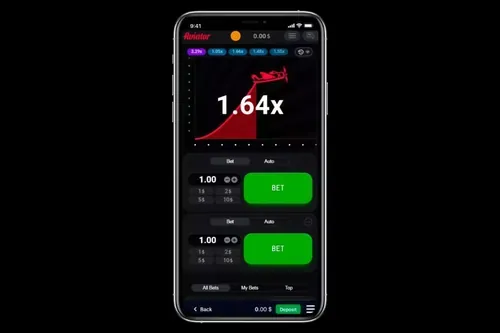
This crash mechanic differs fundamentally from slots, lacking reels or paylines, as a round consists solely of a rising multiplier that requires timely cashing out before the plane flies away. The provably fair system uses SHA-256 with server and client seeds, ensuring transparency that standard casino games cannot match, thereby protecting the integrity of every single wager placed by the user.
While the maximum win cap reaches x1,000,000, this figure applies only if the player survives extreme volatility without crashing early, a scenario that demands strict discipline rather than optimistic hope. Comparing this to Dice, which offers an adjustable volatility and a max win of x970, highlights how Aviator’s structure forces risk management decisions that directly impact the sustainability of the bankroll over time.
Bankroll rules that hold up
A defined bankroll acts as the hard limit for play, preventing emotional decisions from eroding funds beyond what was originally set aside for entertainment purposes during the session. Unlike progressive staking, which raises stakes after losses and accelerates ruin, flat betting maintains a constant stake every round to preserve capital against the inherent 3.00% house edge present in the game mechanics.
The welcome bonus of 300% up to €2,000 plus 100 free spins introduces complex wagering requirements that often exclude instant games like this one from contributing to turnover obligations. Players must calculate whether the potential bonus value outweighs the restriction on using the 97.00% RTP feature, as restricted access to high-return mechanics can effectively nullify the promotional advantage offered by the operator.
When comparing bankroll management strategies, it is crucial to note that the dual-bet mode allows two simultaneous wagers, doubling the exposure per round compared to a single-bet approach. This structural feature increases the variance significantly, requiring a larger initial reserve to absorb rapid fluctuations in the balance caused by the continuous rise and sudden crash of the multiplier curve.
Bet sizing against volatility
Volatility in this crash game is determined by the timing of the cashout relative to the rising multiplier, creating unpredictable swings that demand precise bet sizing strategies to manage risk effectively. Unlike slots with fixed paylines, here the player controls the exit point, meaning that larger bets amplify both the potential gains and the speed of loss when the plane flies away prematurely.
The developer Spribe certifies the game through iTech Labs and BMM Testlabs, confirming that the random number generation adheres to strict standards for fairness and unpredictability across millions of rounds. This certification ensures that no pattern exists in the crashes, forcing players to rely on statistical probability rather than perceived trends when deciding how much to wager in each subsequent round.
Comparing the risk profile to Dice, which has a max win of x970 and adjustable volatility, reveals that Aviator’s x1,000,000 cap requires smaller base bets to remain sustainable over longer periods. A strategy focusing on frequent small wins is mathematically safer than chasing the million-x multiplier, as the latter involves a negligible probability that quickly depletes the allocated stake if not capped strictly.
Session limits worth setting
Setting a time limit for sessions helps prevent fatigue-induced errors, especially since the continuous nature of the rising multiplier requires constant attention and quick decision-making to secure profits. Without external constraints, the immersive quality of the live bet feed can lead to extended play, increasing the total amount wagered and accelerating the realization of the 3.00% house edge over time.
The auto cashout feature provides a mechanical safeguard by executing trades at predetermined multipliers, removing emotional hesitation from the equation and ensuring consistent application of the chosen strategy. This tool is essential for managing volatility, as it guarantees that a portion of the winnings is secured even if the player becomes distracted or delayed in reacting to the final moments of the round.
When evaluating session profitability, one must account for the fact that the theoretical 97.00% RTP is realized only over hundreds of thousands of rounds, not within a single sitting. Short-term results will deviate significantly from this average, meaning that any profit made during a limited session should be viewed as temporary variance rather than a predictable outcome of the game's design.
Why chasing losses fails
Chasing losses by increasing stakes after a crash violates basic probability principles, as each round is independent and the 3.00% house edge remains constant regardless of previous outcomes. This behavior ignores the provably fair mechanism based on SHA-256, which ensures that past crashes do not influence future multipliers, making the pursuit of recovery through higher bets a statistically doomed endeavor.
The availability of a 300% welcome bonus up to €2,000 might tempt players to use promotional funds to recoup personal losses, but these funds typically come with strict wagering requirements that restrict withdrawal options. Attempting to meet these conditions by risking larger amounts on high-volatility rounds often leads to faster depletion of both the bonus and the original deposit due to the increased frequency of total losses.
Unlike progressive systems in other games, the crash mechanic of Aviator does not allow for martingale-style recovery because there is no guaranteed next win to justify the doubled stake. Comparing this to Dice, where volatility is adjustable, shows that while some games offer more control over risk levels, Aviator’s fixed structure demands acceptance of loss as an inherent part of the gameplay loop.
Aviator: key facts
| Parameter | Value |
|---|---|
| Game | Aviator |
| Studio | Spribe |
| Released | 2019 |
| RTP | 97.00% |
| House edge | 3.00% |
| Max win | x1,000,000 |
Common systems and their limits
The theoretical RTP of 97.00% establishes a baseline house edge of 3.00% for Aviator, which dictates the long-term mathematical expectation for any player attempting to beat the system. This fixed edge remains constant regardless of betting patterns, as the crash point is determined by SHA-256 cryptography combining server and client seeds. Consequently, no strategic adjustment can alter the built-in advantage held by the operator over thousands of rounds.
Operators may configure alternative RTP settings such as 96% or even 94%, effectively increasing the house edge beyond the standard 3.00% threshold found in the default configuration. These lower return percentages reduce the potential payout pool available to players, making consistent profitability increasingly difficult without exceptional variance luck. Players must verify the specific game version to understand the exact mathematical disadvantage they face at any given session.
In comparison, other titles like Plane Game from Spribe also feature a high volatility profile with an RTP of 97.00%, yet the risk-reward dynamics differ due to distinct gameplay mechanics. While both games share the same developer and similar return metrics, the instant nature of Aviator requires split-second decisions that amplify the impact of the house edge. Understanding these structural differences helps players manage expectations regarding the likelihood of sustaining wins against the statistical odds.
Flat betting explained
Flat betting involves placing the identical stake amount on every round, thereby maintaining a consistent exposure to the 3.00% house edge across all sessions. This method prevents rapid bankroll depletion during losing streaks, as the wager size never escalates in response to previous outcomes. The simplicity of this approach aligns with the provably fair mechanics, allowing players to focus on cash-out timing rather than complex progression strategies.
The maximum win cap of x1,000,000 represents the upper limit of potential payout, but flat betting rarely approaches this ceiling due to the conservative stake sizing. By keeping bets uniform, players extend their playtime and reduce the variance impact on their total bankroll compared to aggressive staking methods. This steady approach suits those seeking longer engagement with the game rather than chasing immediate, high-risk returns.
When contrasted with progressive systems, flat betting offers greater predictability in terms of expected loss rates over extended periods. While it does not increase the probability of hitting the max win, it ensures that losses accumulate at a manageable pace relative to the initial deposit. This strategy prioritizes longevity and control, making it a rational choice for disciplined players navigating the volatile multiplier environment.
Progressive staking risks
Progressive staking involves raising stakes after losses, a tactic that fails to change the built-in house edge of 3.00% while significantly accelerating the time to ruin. Each independent round retains its fixed probability, meaning previous deficits do not influence future crash points determined by SHA-256 algorithms. Escalating bets merely increases financial exposure without improving the underlying mathematical expectancy of the game.
This strategy often leads to rapid bankroll exhaustion because the required bet sizes grow exponentially during losing streaks, quickly exceeding table limits or available funds. Unlike flat betting, which preserves capital, progressive systems gamble the entire bankroll on the hope of a single winning round recovering all prior losses. The inherent volatility of the crash mechanic makes such recovery highly improbable over the long run.
Comparing this to the dual-bet mode allows players to mitigate some risk by splitting stakes between safer low-multiplier cashouts and higher-risk attempts. However, applying progressive logic to either bet type still amplifies variance without altering the fundamental 97.00% RTP structure. Players adopting this approach must recognize that increased wager sizes only heighten the potential for substantial short-term losses.
What the maths actually allows
The certified RTP of 97.00% indicates that for every 100 € wagered theoretically, 97 € is returned to players over hundreds of thousands of rounds, leaving a 3.00% retention for the operator. This percentage is verified by independent auditors iTech Labs and BMM Testlabs, ensuring the fairness of the provably fair algorithm used in each round. Such certification provides transparency regarding the long-term performance expectations of the game.
With a maximum win potential of x1,000,000, the game offers significant upside, but achieving this requires precise timing and favorable variance within the crash multiplier curve. The continuous rise of the multiplier demands quick decision-making, as delaying cashout risks losing the entire stake when the plane flies away. This dynamic creates a high-variance environment where large payouts are possible but statistically rare events.
While other games like Plane Game share the same 97.00% RTP, the specific mechanics of Aviator emphasize speed and real-time interaction over traditional slot spins. The absence of reels and paylines means outcomes depend entirely on the multiplier trajectory, which is governed by cryptographic seeds rather than random number generators alone. This unique structure defines the mathematical experience distinct from conventional casino offerings.
Reading variance honestly
Variance in Aviator refers to the fluctuation of results around the mean RTP of 97.00%, causing short-term deviations that can appear profitable or devastating depending on luck. High volatility implies that wins may be infrequent but potentially larger, while losses can occur in rapid succession during unlucky streaks. Players must accept that these swings are inherent to the crash game format and cannot be predicted or controlled.
The provably fair system ensures that each round's outcome is transparent and verifiable, preventing manipulation of the multiplier curve by the operator. This transparency allows players to audit past rounds using server and client seeds, confirming that the house edge remains consistently applied. Such verification reinforces trust in the mathematical integrity of the game despite the apparent randomness of crash points.
In contrast to low-volatility slots that offer frequent small wins, Aviator’s design encourages patience and discipline as players navigate unpredictable multiplier spikes. The ability to set auto cashout limits helps manage variance by enforcing predetermined exit points before potential crashes. Recognizing these variance characteristics enables more realistic expectations regarding bankroll management and session duration.
Learning the game in demo first
Aviator operates as a crash game developed by Spribe, utilizing a provably fair algorithm based on SHA-256. This mechanism combines a server seed with multiple client seeds and a nonce to ensure round integrity without relying on random number generators found in traditional slots. Players can verify each outcome independently through the public seed history provided in the game interface.
The theoretical return to player stands at 97.00%, representing a house edge of 3.00% over an extended period. While some operators may configure lower RTP versions such as 96% or 94%, the standard configuration offers a higher long-term retention rate than many competing titles. Tower Rush by Galaxsys matches this 97.00% return but caps its maximum win at just 100x, whereas Aviator allows for significantly larger payouts.
Demo mode allows users to test the dual-bet feature and auto cashout settings without risking real funds. The rising multiplier continues until the plane flies away, requiring quick decision-making that differs from fixed-spin mechanics. Practicing in this risk-free environment helps players understand the timing required before the crash occurs.
Adjusting stakes to your budget
The welcome bonus provides a 300% match up to €2,000 alongside 100 free spins for new accounts. A deposit of €500 generates a €1,500 bonus credit, resulting in a total bankroll of €2,000 available for wagering activities. This substantial increase in playing capital allows for more flexible stake sizing across multiple rounds.
Flat betting involves placing the same stake every round, which preserves the built-in house edge without accelerating variance. Progressive staking strategies that raise bets after losses do not alter the mathematical advantage held by the casino. Such methods only shorten the time until ruin while exposing the player to greater volatility.
The maximum win potential reaches x1,000,000, offering a high ceiling compared to games with lower caps. Tower Rush limits its highest payout to 100x, making Aviator superior for players seeking large single-round returns. Understanding these limits helps players allocate their bankroll appropriately for high-variance sessions.
Recognising a bad session
A session becomes statistically negative when cumulative losses exceed the expected value derived from the 3.00% house edge. With an RTP of 97.00%, the casino retains three cents for every euro wagered over hundreds of thousands of rounds. Short-term deviations are normal, but consistent depletion of the bankroll indicates poor control.
Chasing losses by increasing stakes after setbacks accelerates the depletion of the available balance. The provably fair system ensures that each round is independent, meaning previous outcomes do not influence future crashes. Believing in due corrections leads to irrational betting patterns that ignore the mathematical reality of the game.
Operators may offer lower RTP configurations like 94%, which increases the house edge to 6.00%. This adjustment doubles the expected loss rate compared to the standard 97.00% version. Players should verify the specific game version being played to accurately assess their expected return per hour.
Stopping while ahead
The max win cap of x1,000,000 represents the absolute limit for any single successful cashout event. Reaching significant profits early in a session often correlates with luck rather than skill in a crash game. Locking in gains prevents the inevitable regression toward the mean dictated by the 3.00% house edge.
Unlike slots where symbols must align, Aviator requires manual intervention to secure winnings before the multiplier crashes. Auto cashout features allow pre-setting thresholds, but manual play offers more responsive control during volatile rounds. Knowing when to halt protects accumulated profits from being erased by subsequent rapid declines.
Comparisons with Tower Rush highlight different risk profiles, as its 100x max win is easily reached but rarely exceeded. Aviator’s higher ceiling demands stricter discipline to avoid giving back substantial wins during late-game crashes. Setting a daily profit target and sticking to it ensures sustainable long-term engagement.
Responsible play in practice
Bankroll management dictates setting aside a fixed amount of money strictly for entertainment purposes. Treating this sum as disposable income prevents financial strain when losses occur during gameplay. Aviator’s fast-paced nature requires strict adherence to pre-determined loss limits to maintain control.
The game certification by iTech Labs and BMM Testlabs confirms compliance with technical standards for fairness. Provably fair technology allows players to audit the randomness of each round using cryptographic hashes. This transparency supports responsible gaming by ensuring outcomes are not manipulated behind the scenes.
Free spins included in the welcome bonus offer additional playtime without requiring further deposits. These spins provide extra opportunities to experience the mechanic while staying within the initial budget constraints. Using such bonuses wisely extends engagement without increasing personal financial exposure beyond the planned limit.
DemoRTP & VolatilityHow to PlayAuto CashoutStrategyBonusesMobileDownload & AppMax WinSimilar GamesReviewFAQSitemap
Aviator 2026